The Small Web
Published by ambalek on
Things to read, browser, discover, on the web, the way it was meant to be.
I've got this bookmarks folder on my phone that I made when the web started to get so unusable I basically stopped reading large websites. The folder has a dove emoji (🕊️) and I think I intended it to mean freedom, or maybe calm or quiet. I had this nebulous idea floating around in my head about calm or quiet technology. Maybe ambient technology? Anyway, the bookmarks under the dove were calm, quiet websites, things with no cookie warnings, newsletter popups, and no intrusive ads.
In the dove folder you might find Hacker News, Astronomy Picture of the Day, and some music blogs and websites like Fact Magazine. I'd just dip into it when I was having a coffee, or when I got that impulse that makes you check social media.
I think that desire to read something interesting without selling your soul to Instagram or TikTok is a reasonable thing to want to do. You could read a real book or a magazine, but perhaps you're stranded with just your phone somewhere and want a more healthy digital distraction.
There's now a very strong scene around the indie or small web. I've been collecting more resources again in the dove folder, and it's certainly more than enough to keep me occupied, and I don't feel the social media pull much at all anymore.
Here are some pre-enshittified resources for you to add to your own dove bookmark folder.
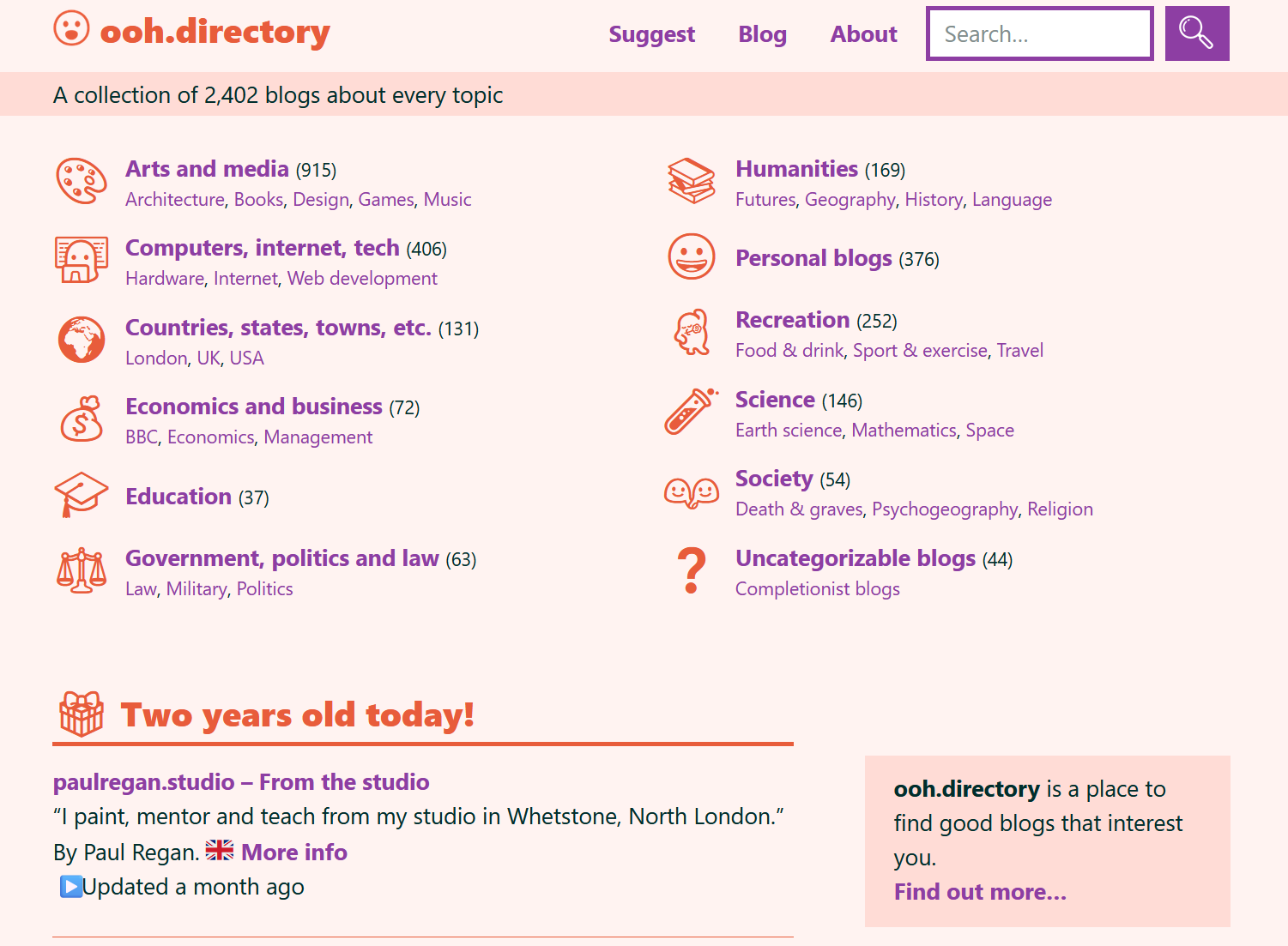
ooh.directory - a directory of blogs about all sorts of hobbies and interests.
minifeed - curated blog reader and search engine.
indieblog.page - I
like the random blog post button. I bookmarked
https://indieblog.page/random so it opens a
random post.
Kagi Small Web - Kagi is a paid search engine, the idea being that by paying a sub they don't need to show ads, so it's a calmer experience overall. The Small Web is an index of sites that meet a list of criteria -- the main one is the content should be human-authored by one person, so it really focuses on personal blogs. The Small Web GitHub repository has more details.
I recently found some directories that don't just focus on blog posts. For example, iii, or Indie Internet Index, links to all sorts of fun things to play with, like games, and things that take you right back to the early web of the 90s. For similar results I also like using Wiby.
And when you're looking for that Reddit-like experience but you don't want the full Reddit with all its Eternal September qualities, you might like Tildes and Lobsters.
I remember when blogs were the main vehicle for discourse on the Internet, in the sort of post-Usenet, web 2.0, pre-social media window when things were surprisingly hopeful and weird and wonderful. In that era I remember finding blog posts for various reasons, looking for reviews of things I wanted to buy, help with technical work, or just someone interesting writing as an informed amateur about anything. When YouTube was gaining ground, I remember thinking a lot about how writing is actually a barrier to sharing content, and clearly video would become the main form of sharing human experiences on the Internet.
I still think that's true, but now indie/small/whatever web movements are here, and have gradually been building over the last 5-10 years, at least there's room for both. I think the main thing is blogging generally isn't as financially sustainable as it was, so if we just let that drop and do it because we enjoy it, then we have less of the influence of sponsorships and advertising that makes YouTube hard to enjoy these days.
If you're considering making a website, you probably should. Stay away from the social media popularity contest and do something weird, it seems more human somehow.